
EV Charger Installation
Home charge points installed after a proper supply and load check, the survey that decides whether 7kW is realistic on your house.
What an EV charger install actually involves
The install itself is the easy part. What determines whether it goes well is the survey: main fuse rating, earthing arrangement, existing load and the cable route from the board to where the car actually parks. Plenty of Dublin houses have a supply that will take a 7kW charge point without a second thought, and some need load management so the charger backs off when the shower and the oven are on rather than tripping the main fuse.
A compliant install means a dedicated circuit with correct protection, the right earth-fault arrangement for the supply type, including open-PEN protection where the charger needs it, and a unit sited so the cable reaches the car without running across a footpath or a doorway. We fit the charger to the wall properly, route cable neatly rather than looping it across a render finish, and set up the app or load-management side before we leave so it's actually working when we go.
We'll also give you a straight answer where the honest one isn't what you hoped: some properties need a supply upgrade from the network operator first, and some on-street or shared-driveway situations aren't safe to charge from a house circuit. Better to hear that at the survey than after a unit is on the wall.
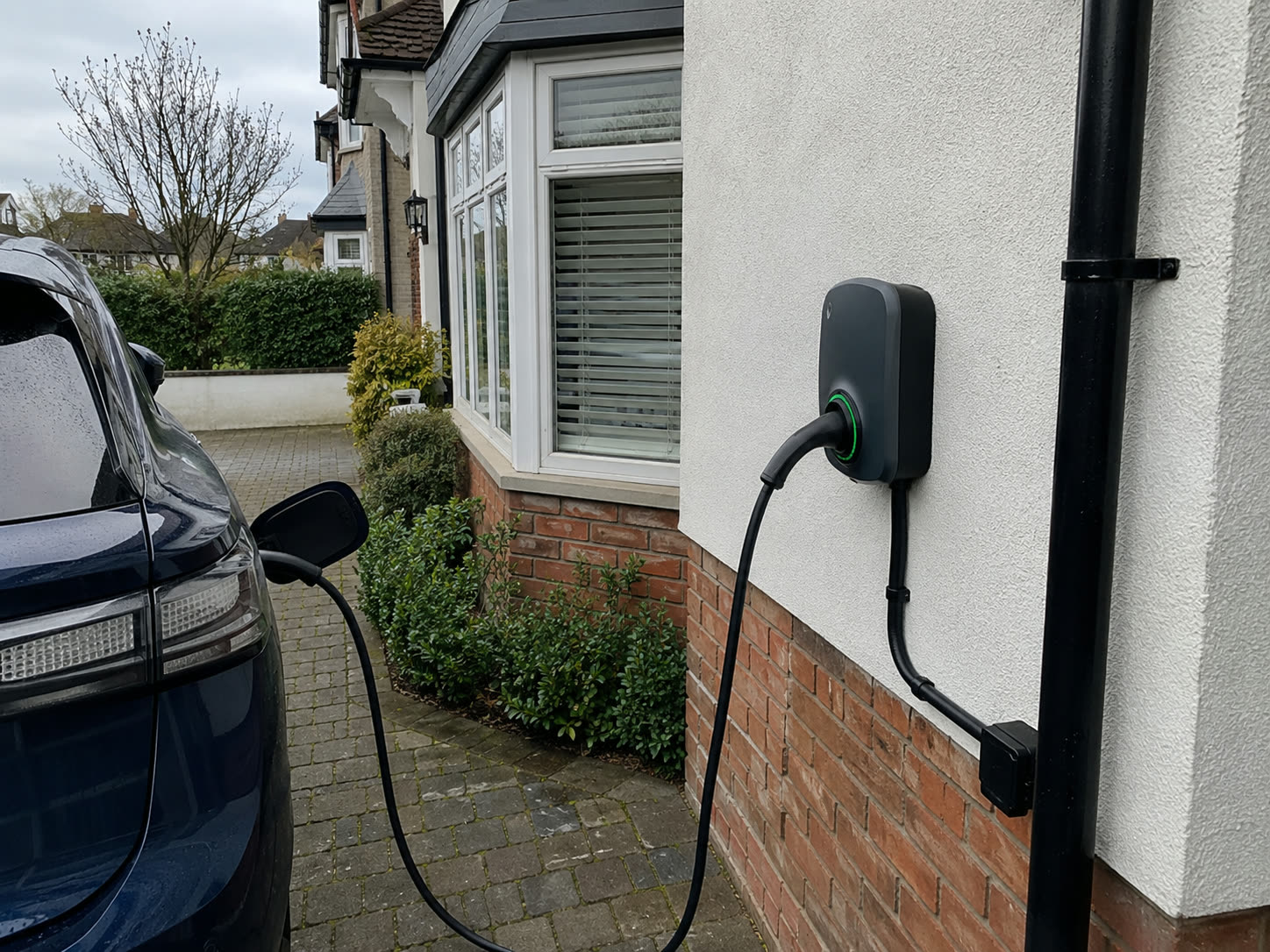
Home EV charger installation completed in Stepaside, Dublin, safely installed, connected and tested.
This home charge point was installed, connected and tested for a customer in Stepaside, and we install the same way right across Dublin.
- Supply, earthing and load assessment before install
- Dedicated circuit with correct protection for the supply type
- Charger sited so the cable reaches without a trip hazard
- Load management set up where the supply needs it
- Commissioned, app configured, tested and certified
Common questions
- Can my house take a 7kW charger?
- Most can. It comes down to the main fuse rating and existing load, where it's tight, load management lets the charger reduce output when the house is drawing heavily, which is cheaper than a supply upgrade and works fine overnight.
- Do I need a tethered or untethered unit?
- Tethered is more convenient day to day; untethered is tidier and future-proof if cars or connectors change. We'll talk through both against where you park rather than pushing one brand.
- How long does the install take?
- How long it takes depends on the cable run from the board to where the car parks, and whether load management or a board alteration is needed. We'll give you a realistic timeframe at the survey, not before.
- Can I charge from an existing outdoor socket?
- Not as a permanent arrangement. A socket circuit isn't designed for hours of continuous full load, and there's no dedicated protection. A proper charge point on its own circuit is the safe answer.
Areas we cover
We carry out this work across Dublin city and county. Several core areas around our south Dublin base have dedicated local pages:
- electrician in Shankill
- electrician in Ballybrack
- electrician in Cabinteely
- electrician in Dún Laoghaire
- electrician in Blackrock
- electrician in Stepaside
- electrician in Dundrum
These dedicated pages show some of the work and services relevant to each area rather than limiting where we work. See the full list of areas we cover across Dublin, and ring us if your area is not listed.
Need someone today?
Describe the symptom rather than the solution and we'll tell you honestly whether it needs an emergency visit or a booked appointment. Emergency call-outs are prioritised.